
...real world solutions
since 1991
Without priorities or guidelines, it is impossible to create goals or a plan. With limited budgets, Earthquake or Disaster preparedness purchases must often be prioritized and spread out over time. Our Disaster Supply guidelines allow you to do just that. The following guidelines were created so schools and businesses could also measure their level of preparedness. Take advantage of our Disaster First Aid Supply Worksheet below to create some realistic numbers for your site.
First Aid is the number one priority after any disaster.
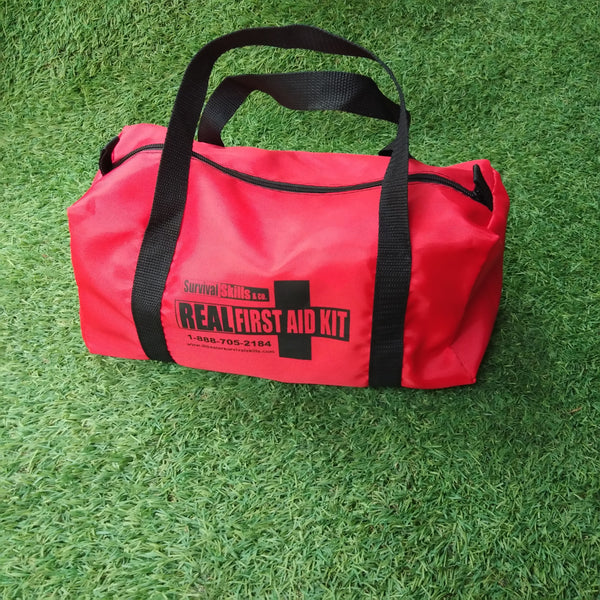
Food and water can wait, injuries won't. The Disaster First Aid Supply Worksheet (click here) is suggested for every 150 persons at your site. After analyzing what injuries you could expect, we developed a list of practical first aid supplies in quantities that will allow you to treat the expected number of injured that a large emergency may create. Remember, the disaster supplies should match the level of training of the rescuer.
Be very cautious of companies trying to sell you First Aid or Earthquake kits that contain products that have been out of protocol for over 3 years. The following, is a list of those items: Hydrogen Peroxide, Alcohol, Ammonia Inhalants, Butterfly bandages, Syrup of Ipecac. Here is why. Peroxide increases bacteria growth, damages tissue, slows healing. Alcohol damages tissue. Ammonia Inhalants can cause allergic reactions, difficulty breathing. Butterflies can close in the bacteria to increase infection. Syrup of Ipecac induces vomiting which can be aspirated into the lungs.
Stretchers
Along with first aid supplies, stretchers should be a top priority in Earthquake Preparedness for schools or businesses. This is one item almost all sites never have enough of. You must have stretchers to safely and efficiently move victims. Your stretcher should be lightweight, strong, and have the ability to be disinfected between rescues. Our Life Lite Emergency Stretcher is the preferred choice.
Light Urban Search & Rescue Bags/Supplies
The second problem confronting your staff will be the locating and rescuing of lightly trapped victims in disasters. Our training teaches them how, our disaster supplies will allow them to perform quickly and safely. From hard hats to knee pads and pry bars are just some of the tools you'll need to succeed in search & rescue. Created by professional firefighters, these earthquake supplies are a realistic solution.
Water Storage
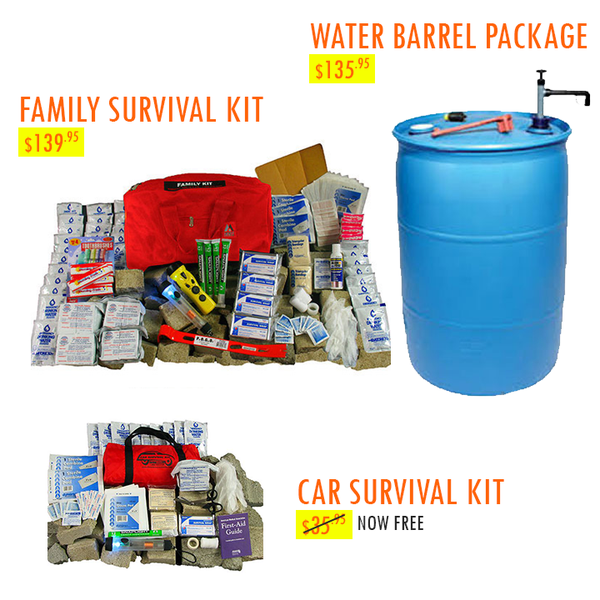
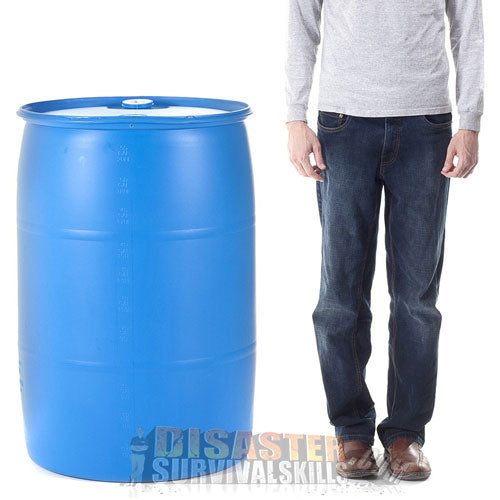
The third concern is water in disasters. To store quantities large enough for your site, the most economical method is water storage barrels. A 55 gal. water barrel will provide 3 days of minimum drinking water for approximately 48 persons. After the initial cost of the barrel , pump, bung wrench and water treatment your only outlay comes again in 5 years when you will need to dump the water, refill and retreat the water barrel.
When buying a pump to distribute your water there are two considerations. Are you going to distribute the water at the barrel, if so, you need a hand pump that is adjustable between 4 and 8 oz. per stroke. If you are going to pump water into another container to distribute at a different location then you would want a siphon pump. The siphon pump does not work well filling up drinking cups. Most of your water from the barrel will spill.
All water has bacteria in it, unless it has been purified and sterilized. Bacteria grows with heat and light. After a few months the bacteria can reach levels that could make you ill. To insure safe drinking water and to avoid rotation and dumping your water storage every few months, plan on per-treating with a product called "Water Preserver". This FDA approved treatment will provide you with 5 years storage in approved (air tight) containers. Bleach should only be used as a last resort as a result of poor planning. Bleach is not designed for consumption. It does not provide long term storage capability. The safer way to treat questionable drinking water the day of the disaster is to either boil at a roll for 5 minutes or use "Water Purification Tablets". They come 50 tablets to a bottle, each tablet will treat 1 quart of water. The tablets have a one year shelf life if the bottle is opened. Unopened they have a 4 year shelf life. Water Pouches are another option. They are purified and sterilized in 4 oz. high-tech packaging, guaranteeing a 5 year shelf life. Not practical for large water storage needs, but perfect for kits, desks, and autos.
Be Prepared with Disaster Supplies and Kits
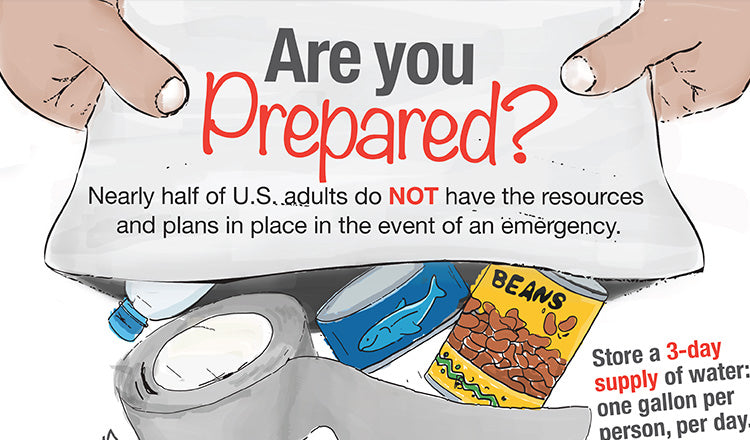
All too often, unexpected tragedy strikes in the form of natural or manmade disasters. In recent years, horrific disasters have pummeled people and places around the globe. The Indonesian tsunami in 2004, Hurricane Katrina in 2005, the 2009 Chinese earthquake, and the 2010 Haitian earthquake brought home the reality that disaster can strike anytime and anywhere. It is heartbreaking to see people struggle - and even die - because they don't have access to basic disaster preparedness supplies and kits.
In the developed world, we're often lulled into a sense of false security because we're relatively affluent and have well-trained and supremely dedicated emergency services workers. But while firefighters and police officers are deservedly called "bravest" and "finest," true disasters can render them helpless. As was the case in places from New Orleans to Haiti, emergency workers can't always get to the scene of a disaster immediately. It can take hours or even days from help to arrive.
That's why it's important that every person has access to enough supplies to ensure survival in the event a disaster occurs. If you don't have emergency supplies on hand, you should rectify that situation immediately. While there are a number of disaster preparedness supplies and kits on the market, the quality varies widely. What separates the best from the rest? The best kits are those developed by real first responders who have intimate knowledge of exactly what is needed in real emergencies. The rest are typically generic kits that could leave you wanting when disaster strikes.
When you tap into the knowledge and expertise of real firefighters, for example, you have access to comprehensive kits for virtually every situation. It's a good idea to have a family kit that enables you to grab it and go in the event you need to evacuate. You should also have a "real" first aid kit that meets the standards of first aid protocols. Because you might not be at home when an emergency occurs, you should also have a car survival kit. The car kit should have the right supplies to keep you safe in summer or winter.
In truth, a disaster preparedness kit will only get you so far. You also need to have the knowledge necessary to ensure a proper response in an emergency. If you're looking online for disaster supplies, find a site that not only has kits designed by people with experience as first responders, but that also offers classes and workshops in disaster survival skills. This is especially important if you're an employer, a school administrator, or a teacher. In the real world, it may be up to you to ensure that your students and schools are safely evacuated, that your employees are able to manage the chaos that comes from a major earthquake or disaster, or that you possess essential lifesaving skills like Disaster First Aid
While we might have the extremely dedicated first responders and emergency services workers, a large-scale disaster means that you'll likely be on your own for hours, days, or even weeks. The right disaster preparedness supplies and training will exponentially increase your chance of survival.
About the Author
Chris Robertson is a published author of Majon International. All Rights Reserved. Copyright 2010 (Thu Apr 08 2010) Majon International.